
How to Pick Colors (Without Having a Breakdown)
The color wheel, 60/30/10, and other tricks designers use
“What colors should I use?” is the question I get asked most often, usually right after someone has spent three hours staring at paint swatches in a hardware store wondering if “Accessible Beige” is actually different from “Agreeable Gray.”
Spoiler alert: they’re both boring, and yes, you can tell the difference if you have well-trained 👀.
But I get it. Picking colors feels intimidating. You’re worried about making the wrong choice, about colors clashing, about your mother-in-law walking in and saying, “Oh. That’s... bold,” in a tone that suggests you’ve made a terrible life decision.
So let me break this down for you the academic way, the fun way, and the way that’ll actually help you make decisions without spiraling.
The Color Wheel: Your New Best Friend
Let’s start with some theory, because understanding why colors work together makes the whole process less mysterious.

The color wheel is basically your cheat sheet for color relationships. Here’s what you need to know:
Complementary Colors sit directly across from each other on the wheel – think blue and orange, red and green, yellow and purple. These create maximum contrast and energy. Use them when you want drama and visual impact.
Analogous Colors are neighbors on the wheel – like blue, blue-green, and green. They create harmony and flow. Use them when you want a space to feel cohesive and calming.
Triadic Colors form a triangle on the wheel – like red, yellow, and blue. They’re vibrant and balanced. Use them when you want a playful, dynamic space that still feels intentional.
Monochromatic means different shades and tints of the same color – like navy, sky blue, and powder blue all in one room. Use this when you want sophistication with minimal risk.
Understanding these relationships gives you a framework. But here’s the thing: the color wheel is a guide, not a prison. If you’re only using it to pick colors, you’re missing out on the good stuff.
The Way I Actually Pick Colors (Hint: It’s More Fun)
Academic theory is great. But in real life, I pick colors the way humans have been doing it for thousands of years: by looking at beautiful things and stealing from them.
Start With Art
If a client has a piece of art they love, I’ll build the entire palette around it. That painting hanging in your living room? It already has a color scheme that works – someone with artistic training (or at least good instincts) put those colors together. Pull the dominant color for your walls, the secondary color for your larger furniture pieces, and the accent colors for pillows and accessories.

Boom. Instant palette that feels personal because it literally came from something you already love.
Steal From Mother Nature
Here’s a truth bomb: there is no better decorator than Mother Earth.
Seriously. Nature gets color right every single time. Have you ever seen a sunset and thought, “Ugh, too much orange”? Have you ever looked at a flower field and said, “The purple and yellow are clashing”?
No. Because nature doesn’t care about your Pinterest board anxiety, and somehow it always works.

It doesn’t have to be the world’s most perfect photograph. It just needs to have color tones that surprise and inspire. Who puts smoky blue-gray next to peach? The Earth does.
I’ll find a photo of something gorgeous – a field of lavender at sunset, a desert landscape, a tropical beach, a forest in autumn – and pull colors directly from it. Those dusty purples and warm golds from the lavender field? Perfect for a bedroom. The deep teals and sandy beiges from the beach? Your living room just got 1000% better.
Nature has already done the hard work. Just copy her homework.
Find One Thing You Love
Sometimes I start with a rug. Or a fabric. Or a wallpaper sample that made me gasp when I saw
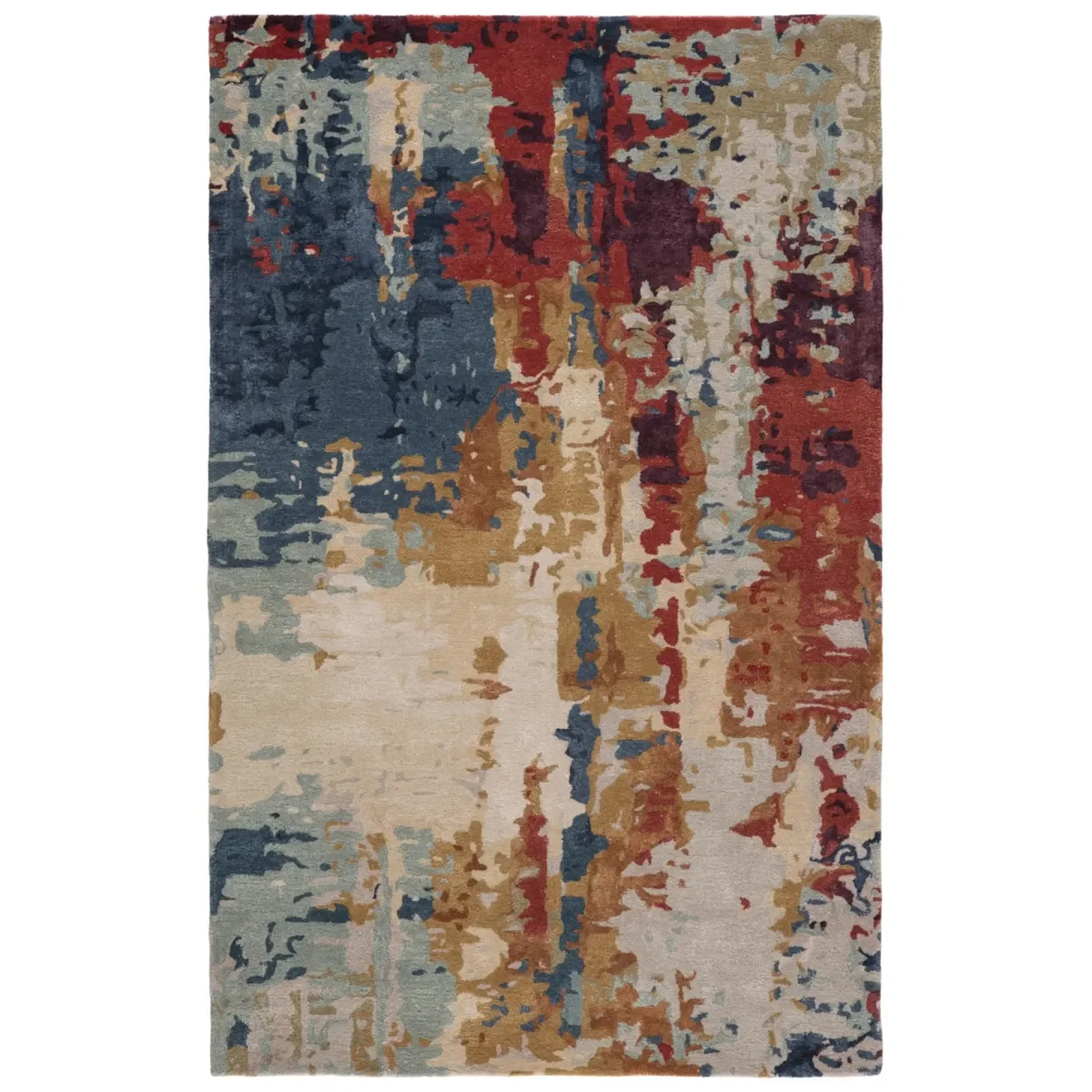
I’m currently building an entire living room concept off this gorgeous Jaipur rug.
If you find one piece that has multiple colors you love, you can build an entire room around it. Let’s say you fall in love with a rug that has deep navy, burnt orange, and cream. There’s your palette. Navy walls, cream sofa, burnt orange pillows. Or cream walls, navy sofa, orange rug. Or... you get the idea.
The point is: you don’t have to invent a color scheme from scratch. You can let something beautiful guide you.
The 60/30/10 Rule: For When You Need Structure
Okay, but what if you’re standing in your living room with seventeen paint swatches and a beautiful rug and you still don’t know what goes where?
Enter the 60/30/10 rule. This is your training wheels for color distribution:
60% = Your dominant color. This is usually walls, large furniture, or the biggest visual element in the room. It’s the foundation.
30% = Your secondary color. Think area rugs, accent furniture, curtains. It supports the dominant color and adds interest.
10% = Your accent color. Pillows, art, accessories, small pops that make the room sing.
So if you’ve got that navy/orange/cream palette: 60% cream walls and sofa, 30% navy rug and curtains, 10% burnt orange pillows and a throw.
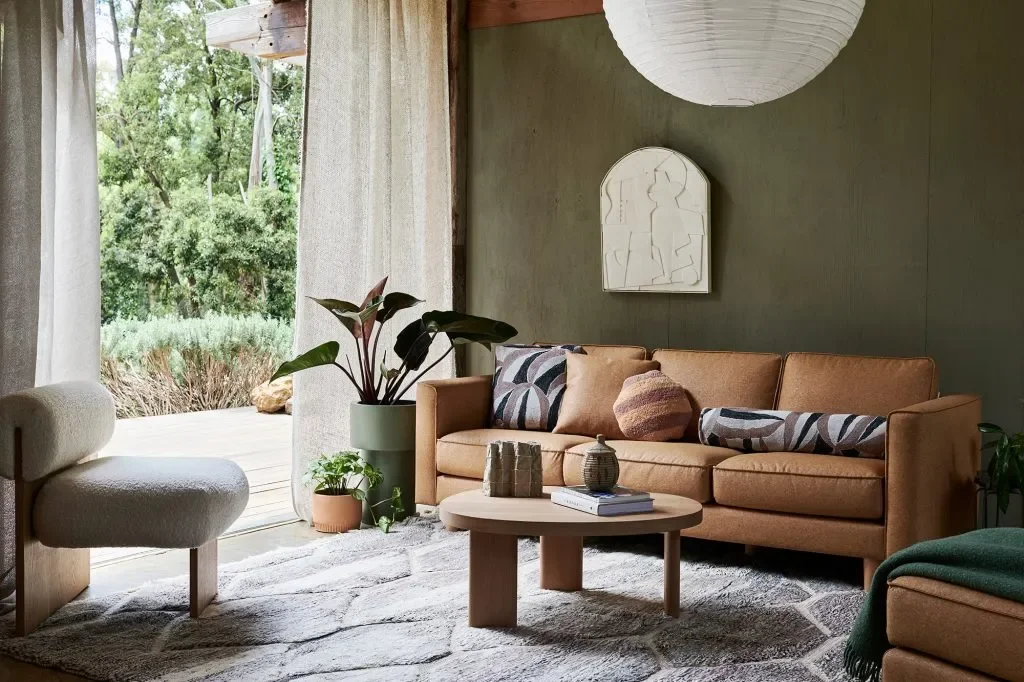
Does this rule need to be exact? No. Will your room explode if you use 35% secondary and 5% accent? Also no. But it’s a helpful framework when you’re feeling overwhelmed and need something to grab onto.
My Actual Advice
Here’s what I want you to do:
Step 1: Stop staring at paint swatches in isolation. They mean nothing without context.
Step 2: Find something you love: a piece of art, a photo of nature, a rug, a fabric, literally anything that makes you feel something.
Step 3: Pull 3-5 colors from that thing. Those are your colors.
Step 4: Use the 60/30/10 rule to figure out where they go.
Step 5: Stop overthinking it and commit.
Will you regret your color choices five years from now? Highly unlikely. But you’ll definitely regret the five years you spent living in a beige box because you were too scared to pick something with personality.
Paint is not a life sentence. Fabric can be replaced. Art can be moved.
But the joy of living in a space that actually reflects who you are? That’s worth the risk.
The Bottom Line
Color theory is useful. The 60/30/10 rule is helpful. But the best way to pick colors is to find something beautiful and let it guide you.
Trust your instincts. This is the hardest lesson to teach to clients but it works wonders. If it came from your imagination, it will work 95% of the time.
And for the love of everything holy, stop defaulting to beige just because it feels safe.
Your space should make you happy. Pick colors that do that.
What’s your relationship with color? Are you a “I need seventeen mood boards before I commit” person or a “I saw it, I loved it, it’s on my wall” person? Contact me and confess.